

Features
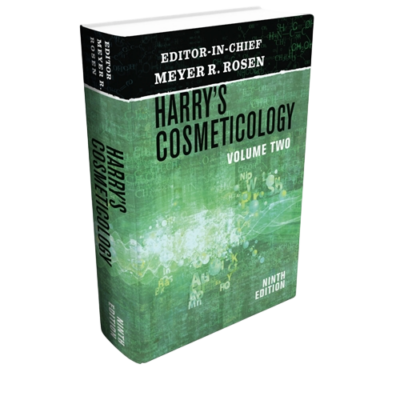
Harry’s Cosmeticology 9th Edition Volume 1
Part 1 Marketing
Part 2 Regulatory Requirements, Intellectual Property, Achieving Global Market Success
Part 3 The Substrates
Part 1. In The Beginning
Part 1.1
Marketing Concepts to Empower Technical People
Darrin C. Duber-Smith, MS, MBA Senior Lecturer Metropolitan State University Denver
Table of Contents
1.1.1 The Magic and Mythology of Marketing
1.1.2 The Marketing Concept
1.1.3 Assessing the Marketing Environment
1.1.4 The Four P’s
1.1.5 Development, Prototypes, Testing, and Commercialization
1.1.6 The Truth About Innovation
1.1.7 The Missing Links
Part 1.2
Creating the Right Fragrance for Your Personal Care Product
Jill B. Costa, Ph.D.
Bell Flavors and Fragrances
500 Academy Drive
Northbrook, IL 60062
Table of Contents
1.2.1 The Fragrance House
1.2.2 Fragrance Materials
1.2.3 What is a Fragrance Composition?
1.2.4 Creation / Construction of Fragrances
a. Top, Middle, and Base Notes
b. Fragrance Characters
1.2.5 Interaction of Fragrance Materials with Product Bases
a. Volatility / Boiling Point
b. Hydrophobicity / Hydrophilicity (Octanol-Water Partition Coefficient, log KOW)
c. Odor Detection Thresholds
1.2.6 Evaluation of Fragrances
a. Product-Use Cycle
b. Fragrance Complexity
1.2.7 Limitations of Fragrances
1.2.8 Cost Structure of Fragrances
a. Carriers
b. Concentration-Cost Considerations for Fragrances
1.2.9 Troubleshooting Fragrances
a. Color Changes
b. Physical Product Stability
c. Odor
1.2.10 Fragrance Types Defined
a. Traditional Fragrances
b. EU Allergen Label Free or Allergen Free
c. Water-Soluble Fragrances
d. Water-Dispersible Fragrances
e. INCI Blends
1. Natural INCI Blends
2. Allergen-Label-Free INCI Blend
3. Traditional INCI Blend
4. “Unscented” INCI Blend
f. Natural Fragrances
1. Traditional Natural Blends
2. Essential Oil Natural Blends
g. GRAS Fragrances (Generally Recognized as Safe)
Conclusion
References
Part 1.3
Fragrance Packaging Design:
A Multi-Sensory Experience from Concept to Consumer
Renee Bukowski
Senior Product Development Manager
Tru Fragrance and Beauty
1250 Broadway, Suite 1901
New York, NY 10001
Table of Contents
1.3.1 Integrated Process: The Brief
1.3.2 Smell Through Hearing: Consumer Testing
1.3.3 Smell Through Seeing: Fragrance Needs Color
1.3.4 Smell Through Touching: How Will the Consumer Feel?
1.3.5 Smell Through Smelling: Tell a Story, Paint a Picture
Conclusion
References
Part 1.4
Understanding the Value of Molecular Cell Biology and Gene Analysis for the Next Generation of Cosmetic Products
Howard Epstein Ph.D.,
EMD Chemicals, Philadelphia PA
Table of Contents
1.4.1 Introduction
1.4.2 Principles of Molecular Biology
1.4.3 Proteomics, genomics and epigenetics
1.4.4 Application for Skin Care
1.4.5 (Future perspectives) Conclusion
References
Glossary
Part 2 Regulatory
Part 2.1
Regulatory Requirements, Intellectual Property and Achieving Global Market Success for Cosmetic Products
Co-Editors’ Introduction
Ruud Overbeek and Meyer R. Rosen
Part 2.2
An Overview of the Changing Regulatory Landscape in the U.S and the E.U. and how to Deal with them…
Dr. Matteo Zanotti Russo
University of Pisa
Angel Consulting SAS Milano
Table of Contents
2.2.1 The challenge of “changing standards”
2.2.2 Regulatory Requirements for Cosmetics in the United States
a. Introduction: roles and responsibilities
b. Rules and references
c. Definition of Cosmetic, field of application, drugs and cosmetics, cosmeceuticals
d. Classification of Cosmetic/Drug
e. How to manage Cosmetic/Drug
f. Cosmetics and Soaps
g. Labeling and package of cosmetics
h. Warnings
i. Missing INCI name; what to do
j. How to get the assignment of a new INCI name
2.2.3 Guide to Cosmetic Development and Safety Evaluations
a. Compliance of limited/regulated ingredients
b. Safety assessment of cosmetics according to FD&C Act
c. Regulated/limited substances
d. Prohibited ingredients and impurities according to the FDA
e. Color additives
f. Safety profile of substances: source of information
g. Safety profile of finished product
h. Microbiological requirement
i. Activity of manufacturers/importers/exporters
j. FDA plant inspection checklist
k. Activity of public health authorities: notification/permissions, audits
l. Future developments of U.S. legislation
2.2.4 Regulatory Requirements for Cosmetics in the European Union
a. Introduction, roles, and responsibilities
b. “Intercontinental” products
c. Classification of cosmetic/drug, borderline products
d. Roles and Responsibilities
e. Definition of “safety”
f. Labeling
g. Troubles on EU INCI names, and what before and after the “Glossary”
h. Guidelines on labeling
i. Manufacture of cosmetics for the European market
2.2.5 PIF and safety assessment of European cosmetics
a. Profile of the safety assessor
b. The structure of documents
c. Annex I: CPSR
d. Annexes that have to be considered: II to VI
2.2.6 Safety profile of substances: source of information
2.2.7 The safety assessment from raw material to finished product
a. Animal Testing
b. CMR
2.2.8 The Notification in the CPNP
2.2.9 Market Surveillance, activity of EU Authorities (Articles 22-23), RAPEX
a. Other laws that affect the EU 1223/2009: REACH (EU regulation on chemicals)
2.2.10 Practical features: how to move towards compliance with EU regulations
Conclusions
References
Part 2.3.1
Achieving Global Market Access – focus on Russia
Ramzia Lefebvre
Technical Manager for Russia and Customs Union Certification
Intertek France
Government & Trade Services
Table of Contents
2.3.1.1 Introduction
2.3.1.2 What is the customs union and what is its aim?
2.3.1.3 What were the old requirements and procedures of product
Conformity assessment and how have they progressed to date?
1. Prior to July 1, 2012
2. Since July 1, 2012
2.3.1.4 Overview of the new customs union technical regulation “about safety of perfumery and cosmetic products”
1. Definition of perfumes and cosmetics according to CU Technical Regulation
2. Conformity assessment documents
a. State registration
b. TR declaration of conformity to customs union
3. Requirements for perfumes and cosmetics
4. Labeling requirements
5. Mark of conformity
2.3.1.5 How different are the new rules from European requirements?
2.3.1.6 Do the new rules simplify access to the combined Russian and cu market? How do new rules affect exports of cosmetics to Russia?
2.3.1.7 business climate in Russia and reformsRussia joined WTO
References
Part 2.3.2
Kingdom of Saudi Arabia (KSA): Cosmetics and Perfumery Products: Market Access and Regulations
Ms. Aurlie Bafoil
Cosmetic Regulatory Affairs Senior Analyst
Intertek Government and Trade Services
Table of Contents
2.3.2.1 Regulatory Framework
a. Cosmetic ruling authority
b. Cosmetic regulations and sanctioned standards
1. Sanctioned Safety Standard
2. Guidance for Products Classification
3. Product-specific standards
2.3.2.2 Definition and Scope of Application
a. Definition
b. Classification
2.3.3.3 Labeling
a. General rules
b. Specific rules
2.3.2.4 Market Access
a. Certification process
b. Conformity assessment
c. Key issues
References
Part 2.3.3
Achieving Global Market Access – focus on China
Mr. Zhongrui Li (Mr. Ray Li),
Toxicological Risk Assessor,
Table of Contents
2.3.3.1 Category of cosmetics in China: special use and non-special use cosmetic
2.3.3.2 Oral products requirements
2.3.3.3 Document and testing requirements during product registration
2.3.3.4 Animal testing requirements in China
2.3.3.5 Safety assessment for ingredients and finish products
2.3.3.6 Comparison of EU and China regulation requirements
2.3.3.7 Existing and new cosmetic ingredients in China
Part 2.3.4
Nanomaterials in Cosmetics: Regulatory and Safety Considerations
Jeffrey W. Card and Tomas Jonaitis
Jeffrey W. Card, Ph.D.
Senior Program Manager, Toxicology
Pharmaceuticals & Healthcare
Intertek Cantox
2233 Argentia Road, Suite 308
Mississauga, Ontario, CANADA L5N 2X7
Table of Contents
2.3.4.1 Regulation of Cosmetics Containing Nanomaterials
a. Definition of Nanomaterial
b. Regulation in Europe
c. Regulation in the United States
d. Regulation in Canada
2.3.4.2 Safety Assessment Considerations for Nanomaterials
a. Study Design Aspects
b. Nanomaterial Characterization
c. Dose Metrics
d. Assay Interference
Conclusion
References
Part 2.4
Intellectual Property (IP) Issues: Patents and Trade Secrets
Charles Brumlik, J.D., Ph.D.
Table of Contents
2.4.1 Introduction
2.4.2 Typical IP Timing in Cosmetics and Personal Care
2.4.3 Procuring IP Rights
a. Patents
b. Utility Patent (most common patent)
c. U.S. Provisional Application
d. Design Patent or Industrial Design (for nonfunctional look of product)
e. Plant Patent (for live plant species)
f. Utility Model (sometimes called patent-lite, mainly in China, Japan, and Korea)
2.4.4 General Criteria of Patentability
2.4.5 Patent Application Timeline
2.4.6 Patent Organizations Across the World
a. National Patent Systems
2.4.7 Patent Cooperation Treaty (PCT) The main route for obtaining patents international
a. European Patent Convention
b. Regional Patent Organizations
2.4.8 Trade Secret
2.4.9 Trademarks & Service Marks
a. Trademark
b. Service Mark
c. Trade Dress
d. Copyright
2.4.10 Enforcing IP Rights & Reducing IP Risk
a. Freedom to Operate
b. IP Information from Packaging
c. IP Issues While Partnering with Third Parties
d. IP Litigation & Patent Infringement
2.4.11 Recent and Hot IP Issues
a. Asian Natural Herbal Ingredients
2.4.12 Mining IP Informationfor Search, Analytics, Competitive Intelligence
a. Patent Searching
b. Patent Classes
c. Patent Search Sites
d. Trademark Searching
e. Searching for Industrial Designs
Abbreviations
References
Part 3 The Substrates
Part 3.1.1
The Skin: Structure, Biochemistry, and Function
Editor of The Skin, Structure, Biochemistry, and Function:
Bozena “Bo” B. Michniak-Kohn, Ph.D., M.R.Pharm.S.
Professorof Pharmaceutics
Ernest Mario School of Pharmacy
Director & Founder
Center for Dermal Research (CDR)
NJ Center for Biomaterials,Life Sciences Building
RutgersThe State University of New Jersey
145, Bevier Road,
Piscataway, NJ 08854.
www.michniaklab.org
Contributors:
1. Amy S. Pappert, M.D.
Assistant Professor, Department of Dermatology
UMDNJRobert Wood Johnson Medical School
1 World’s Fair Drive, Suite 2400Somerset, NJ 08873
2. Philip Wertz, Ph.D.
Professor Department of Oral Pathology, Radiology, and Medicine
N450 DSB, Dows Institute
University of Iowa
Iowa City IA 52242
3. Nripen Sharma, Ph.D.
Clinical Scientist/Project Manager/Technical Support
Salvona Technologies LLC
65 Stults Rd., Dayton, NJ 08810
4. Anna Langerveld, Ph.D.
President and CEO
Genemarkers
4717 Campus Drive, Suite 1800
Kalamazoo, MI 49008
5. Ada Polla
Alchimie Forever, The Polla Beauty Group
1010 Wisconsin Avenue NW, Suite 201
Washington, DC 20007
Online: www.alchimie-forever.com
6. Barbara Polla, M.D.
Medical Doctor
Alchimie Forever, The Polla Beauty Group
1010 Wisconsin Avenue NW, Suite 201
Washington, DC 20007
7. Anne Pouillot, MS
Director of Science of Alchimie Forever
Alchimie Forever, The Polla Beauty Group
1010 Wisconsin Avenue NW, Suite 201
Washington, DC 20007
8. Karen E. Burke, M.D., Ph.D.
Dermatologist
429 East 52nd Street
New York, New York 10022
9. Gopi Menon, Ph.D.
Senior Science Fellow
Ashland Specialty Ingredients
1361 Alps Road
Wayne, NJ
10. Nava Dayan Ph.D.
President
Dr. Nava Dayan LLC
Table of Contents
Part 3.1 Substrate:
The Skin:
Structure, Biochemistry and Function
3.1.1 Skin Morphology
3.1.2 Epidermis and the Keratinizing System
a. Dermo-Epidermal Junction
b. Stratum Basale
c. Stratum Spinosum
d. Stratum Granulosum
e. Stratum Lucidum
f. Stratum Corneum
3.1.3 Terminal Differentiation
3.1.4 Pigmentary System of the Skin
3.1.5 Langerhans Cells and Dendritic Cells
3.1.6 Dermis
a. Collagen
b. Elastin and Reticulin
c. Ground Substance
d. Nerves
e .Vasculature
f. Muscles
3.1.7 Appendageal Structures
a. Eccrine Sweat Glands
b. Apocrine Glands
c. Sebaceous Glands
3.1.8 Hair
3.1.9 Nails
3.1.10 Barrier Function and Permeability
a. The Barrier Property of Skin: A Historical Perspective
b. Stratum corneum
c. Other Barriers:
d. Penetration of Cosmetic Actives Through the Stratum corneum
e. Penetration Versus Protection
3.1.11 Immunological Function
3.1.12 Cytokines
3.1.13 Enzymes
3.1.14 Ultraviolet Radiation-induced Photo-damage and Skin Cancer
3.1.15 Gene expression in Skin Care
a. Genomics Technologies
b. Genomics and the Skin
c. Gene Expression Analysis: A Breakthrough for Cosmetic Science
d. Challenges
e. Looking Ahead
f. Recommended Reading
Glossary
References
Part 3.2.1
Classification Scale for Skin Complexions Around the World
Eva Patel
Skin Rx Inc.
Founder & CEO
Table of Contents:
3.2.2 Why we need an updated Skin Classification Scale
3.2.3 The methodology in which the study was conducted:
3.2.4 Summary, Analysis
3.2.5 Where Methodology Meets Results
Part 3.2.2
Dermatologic Disorders in Skin of Color
Aanand N. Geria, MD
Table of Contents:
3.2.2.1 Introduction
3.2.2.2 Pharmacology
3.2.2.3 Indications
a. Acne
b. Melasma and Post-Inflammatory Hyperpigmentation
c. Photo-aging
3.2.2.4 Adverse Effects
References
Part 3.2.3
Asian Ethnic Skin: Specialty Corrective Cosmeceuticals for Asian Ethnic Skin Care
Eva Patel
Skin Rx Inc.
Founder & CEO
Gurpreet (Gogi) Sangha
G.S. Cosmeceutical USA Inc.
Founder & CEO
Table of Contents
3.2.3.1 Defining the Asian Ethnic Market
3.2.3.2 Differences Between Content Levels of Melanin in the Skin
3.2.3.3 Common Skin Conditions for Ethnic Skin and Treatment Methods3.2.3.4 Tips to Achieve Healthy, Beautiful Skin
Part 3.2.4
Compromised Skin in the Elderly
Authors:
R. Randall Wickett, Ph.D., Martha Tate, Ph.D.
Randall Wickett, Ph.D.
Emeritus Professor
Pharmaceutics and Cosmetic Science
Univ. Cincinnati College of Pharmacy
3225 Eden Ave
Cincinnati, Oh 42567
Martha Tate, Ph.D.
Research and Engineering
Kimberly-Clark Corporation
1400 Holcomb Bridge Road
Roswell, GA 30076
Table of Contents
3.2.4.1 Structure of the Skin
3.2.4.2 Skin Aging: Changes in the Epidermis and Stratum Corneum
3.2.4.3 Aging and the Dermis
3.2.4.4 The Dermatoglyphic Pattern of the Skin
3.2.4.5 Aging and Mechanical Properties of Skin
3.2.4.6 Telangiectasia
3.2.4.7 Photo-Aging Mechanisms
3.2.4.8 Photo-Aging and Appearance
3.2.4.9 Compromised Elderly Skin Treatments
a. SunscreensAn Ounce of Prevention
b. All-Trans Retinoic Acid (Tretinoin): The Gold Standard
c. Cosmeceutical Treatments for Aging Skin
d. Vitamin A and “Cosmeceutical” Derivatives
e. Niacinamide
f. Alpha and Beta Hydroxy Acids
g. Antioxidants
h. Other Actives
Conclusions
References
Part 3.3.0
The Hair
Editors Overview
Editor: Manuel Gamez-Garcia
Ashland Specialty Ingredients
Part 3.3.1
An Overview of the Physical and Chemical Properties of Hair
and their relation to Cosmetic Needs, Performance and Properties
Manuel Gamez-Garcia
Ashland Specialty Ingredients
Table of Contents
3.3.1.1 Introduction
3.3.1.2 Chemical composition of hair
3.3.1.3 Main types of hair cells
3.3.1.4 Cortical cells and their role in hair properties
a. Cortical cell structure and composition
b. Viscoelasticity in hair and cortical cells
c. Shape-memory properties of hair
d. Viscoelasticity and the shape-memory properties of hair
e. Water and moisture absorption/desorption by hair and cortical cells
3.3.1.4 Different types of cortical cells and hair shape
3.3.1.5 Cuticle cells and their role in hair properties
a. Cuticle cell structure and composition
b. Viscoelasticity in hair and cuticle cells
c. Water and moisture absorption/desorption by cuticle cells
d. Optical properties of cuticle cells
e. The medulla cells
3.3.1.7 Melanin pigments in hair
3.3.1.8 Hair function
3.3.1.9 The follicle
a. Different zones in the follicle
b. Life cycle of the follicle
References
Part 3.3.2
An Overview of Hair Follicle Anatomy and Biology
Paul Mouser Ph.D.
Ashland, Inc., Ashland Specialty Ingredients, Bridgewater, NJ, United States
Table of Contents:
3.3.2.1 Hair Follicle Structure
3.3.2.2 Hair Follicle Cycling
3.3.2.3 Aging of the Hair Follicle
Conclusion
References
Glossary
Part 3.3.3
Hair Aging: Fundamentals, Protection and Repair
Padmaja Prem, Ph.D
Vice President, Research & Development
Combe Incorporated, 1101 Westchester Avenue
White Plains, NY 10604
Table of Contents
3.3.3.1 Introduction
3.3.3.2 Structure, Composition, and Natural Color of Hair
3.3.3.3 Fundamentals and Signs of Aging Hair
3.3.3.4 Photo-Aging of Hair
3.3.3.5 Protection of Hair from Aging
a. Scalp Care
b. Hair Care
3.3.3.6 Anti-Aging Hair Care Products
Conclusion
References
Glossary
Part 3.3.4
Mechanisms of Changes in Hair Shape
Manuel Gamez-Garcia
Ashland Specialty Ingredients
Table of contents:
3.3.4.1 Introduction
3.3.4.2 The shape memory properties of hair
a. Definition of shape memory materials
b. Hair is a biopolymer with shape memory properties.
c. Temporary shape memory in hair
d. The apparent permanent shape in hair
e. Permanent shape memory in hair
f. Changes to the permanent shape of hair
g. Shape reversion
3.3.4.3 Changes in hair shape by water-setting
a. The process
b. Physical processes taking place inside hair during water-setting
c. Temporary shapes induced by long-term deformations
d. Limitations of water-setting
3.3.4.4 Changes in hair shape by hot iron treatments
a. Introduction
b. The process
c. Mechanical action of the hot iron
3.3.4.5 Physical processes taking place inside hair during hot ironing
a. Water evaporation
b. Phase changes and transitions in hair
c. The mechanisms of water and hot iron setting are different.
d. Hot iron setting: partial denaturation of crystalline phase and vitrification of the amorphous phase
e. Heat transfer from hot iron to hair
f. Unwanted consequences of friction and rising hair temperature above Tg
3.3.4.6 Hair shape changes induced by permanent waving solutions
a. The process
b. Physical and chemical processes taking place inside hair during permanent waving
3.3.4.7 Hair shape changes induced by alkaline relaxers
a. The process
b. Physical and chemical processes taking place inside hair during alkaline straightening
c. shapeless haira new straight shape
3.3.4.8 Hair shape changes induced during grooming practices
a. Static vs. dynamic changes in hair shape
b. Friction vs. bending forces in dynamic changes in hair shape
3.3.4.9 Hair volume and changes in hair shape
a. Definition of volume
b. Main challenges in creating volume
c. Back-combing and “static fly away”
3.3.4.10 Frizz in hair and changes in shape
3.3.4.11 Body in hair and changes in hair shape
3.3.4.12 Hair shape changes induced by styling polymers
3.3.4.13 Role of styling polymers in changing hair shape
a. Temporary setting of hair with aerosols
b. Temporary setting of hair with gels and mousses
c. Mechanical properties of welding seams and spots
d. Effect of polymer glass transition temperature (Tg) on styling
e. Adhesive strength at the polymer/hair interface
References
Part 3.3.5
Eyelashes: Anatomy and Conditioners
For Increasing Length and Fullness/Thickness
Author:
Susan Lin, M.D.
448 N. San Mateo Drive San Mateo CA 94401 USA
Table of Contents:
3.3.5.1 Lash Anatomy
3.3.5.2 Lash Growth Cycle
3.3.5.3 Lash Conditioners
a. History
b. Safety Assessment
c. Study
d. Discussion
e. Newer- Generation Lash Conditioners
f. Observations with lash conditioner usage:
g. Results
Conclusion
Future Development
References
Part 3.4
The Nails
Dr. Lawrence Silverberg
Vice President of Technology & Clinical Director
NailPure
Table of Contents:
3.4.1 Introduction -Toenails and Fingernails
a. Fashion
b. Function
c. Anatomy
e. Development and Formation
3.4.2 Histology, Ultrastructure, and Composition
3.4.3 Rate of Nail Growth
3.4.4 Nail Pathologies
a. Absence of Nails (Anonychia)
b. Nail Shedding (Onychomadesis)
c. Nail Separation from the Nailbed (Onycholysis)
d. Brittleness
e. Striations (Onychorrhexis)
f. Spoon-Shaped Nails (Koilonychia)
g. Splitting (Onychoschizia)
h. Pitting
i. Leukonychia
j. Onychomycosis
k. Paronychia
l. Discoloration
m. Subungual hematoma
References
Part 3.5
The Nose
Accessing the Biology of Human Olfaction:
New, All-Natural Fragrance Ingredients;
Novel Consumer Fragrance Experiences and Applications
Author:
Kambiz Shekdar, Visiting Scientist, Rockefeller University
Table of Contents
The Biology of Olfaction and Fragrance Ingredient Discovery and Creation
3.5.1 Odorant Receptors
3.5.2 Cell-Based High-Throughput Odorant DiscoveryPrinciples and Basic Design
3.5.3 New Ingredients and Applications
3.5.4 Methods
References
Part 3.6.1
The Mouth and Oral Care
Roger Ellwood
Colgate-Palmolive Company
Director of Clinical Research for Europe
and
Scott Harper (Author of Harry’s 8th Edition: Mouth and Oral Care)
Table of Contents:
3.6.1 The Teeth And Their Surroundings
3.6.2 The Teeth
a. Tooth Anatomy and Structure
b. Dental Enamel
c. Dentin
3.6.3 The Gums
3.6.4 Oral Fluids
a. Saliva
b. Gingival Crevicular Fluid (GCF)
3.6.5 The Oral Soft Tissues
3.6.6 Dental Deposits
a. Dental Pellicle
b. Dental Plaque
c. Dental Calculus
3.6.7 Major Oral Problems And Their Remedies Overview
a. Dental Plaque
b. Dental Calculus
c. Dental Caries (Tooth Decay)
– Control of Caries
– Remineralization
d. Dental Erosion
e. Periodontal Diseases (Gingivitis And Periodontitis)
f. Dental Hypersensitivity
g. Dental Staining
h. Oral Malodor
i. Dry Mouth (Xerostomia)
j. Aphthous Ulcers (Canker Sores)
References
Part 3.7
Lip Skin: Structure and Function
Author:
Philip Wertz, Ph.D.
Dows Institute
University of Iowa
Iowa City IA 52242 USA
Table of Contents:
3.7.1 Vermilion zone/vermilion border
3.7.2 TEWL/hydration
3.7.3 Sebaceous follicles
3.7.4 Stratum corneum lipids
3.7.5 Change with age
Part 3.8
Feminine Rejuvenation
Author:
Susan F. Lin M.D.
448 N. San Mateo Drive
San Mateo CA 94401 USA
Table of Contents:
3.8.1 The Anatomy
3.8.2 Vulvar Innervations: Physiological and Analytical
3.8.3 Vulvar Atrophy: Causes and Physiology
3.8.4 Treatments
a. Over-the-Counter Treatments
b. Pharmacologic Treatment
c. Novel stem-cell-derived peptides
3.8.5 A New Frontier

Reviews
There are no reviews yet.